Celebrity activism gets mocked constantly. People roll their eyes when pop stars and Hollywood actors talk about the planet, assuming it is just a PR stunt to sell albums or win awards. But sometimes, massive star power actually moves state governors to lock up millions of acres of rainforest.
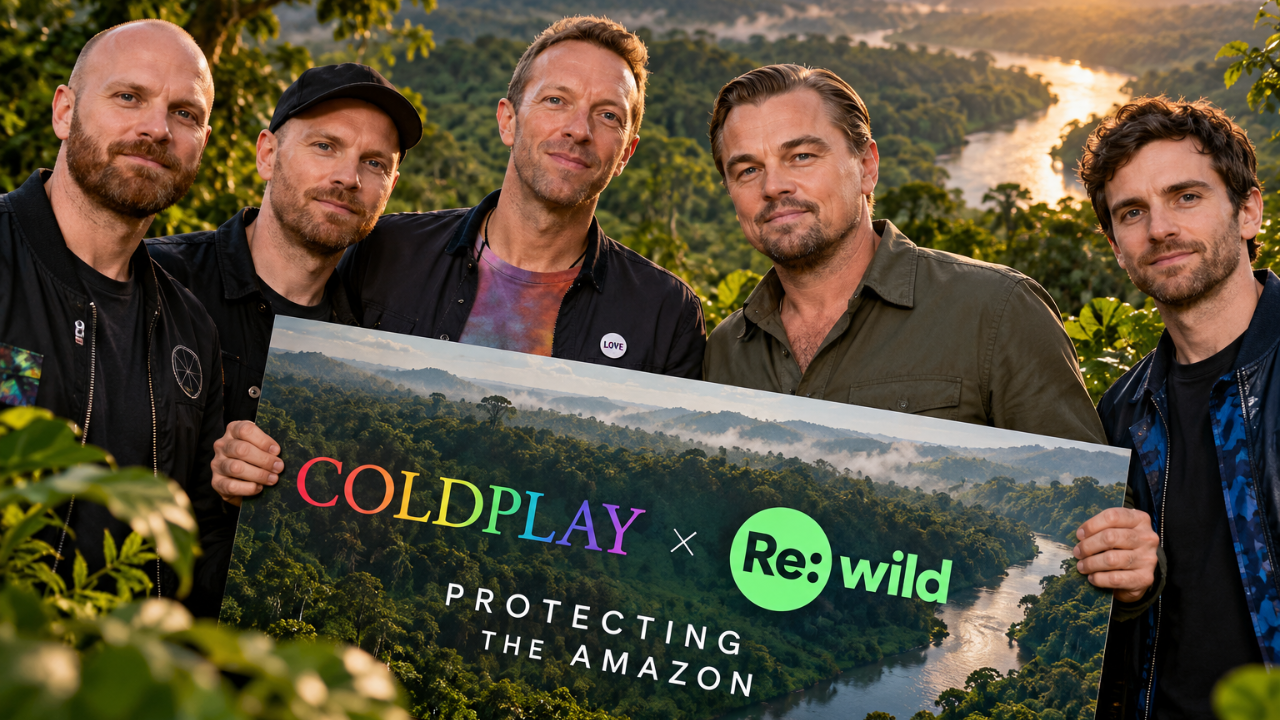
Look at what happened when British rock band Coldplay teamed up with Leonardo DiCaprio’s conservation organization Re:wild and Global Citizen. They didn't just pose for photos or record a public service announcement. They leaned directly on regional leaders in Brazil right before a massive music festival, pushing them to make concrete environmental commitments.
Six state governments actually signed on, pledging to safeguard over 1.7 million hectares of vital forest. That is not just talking points. That is real policy protecting millions of acres and hundreds of remote Indigenous communities.
How the Campaign Forced Political Action
When you want to protect the Amazon, shouting from Los Angeles or London does nothing. You have to get the actual governors of Brazil’s northern states on board.
Back in 2021, ahead of the Global Citizen Live event, Coldplay used its massive global platform to urge eight Brazilian state leaders to step up their climate action. The timing mattered. Governors want international visibility, but they also face intense domestic pressure from agricultural and industrial sectors pushing to clear land.
By bringing international star power to the table, the campaign gave those governors political cover to do the right thing. Amapá, Amazonas, Ceará, Piauí, Pará, and Paraíba all answered the call. They committed to cutting emissions, drafting serious climate adaptation plans, and carving out millions of hectares of protected territory.
Real Ground Truth in Pará
Promises on paper are easy to make and even easier to break. The real test is what happens after the cameras turn off.
Pará showed how it actually works. Governor Helder Barbalho became one of the first to publicly commit to the initiative. Following that pledge, the state officially established the Refúgio de Vida Silvestre de São Benedito, a brand new protected area in the Amazon ecosystem.
The momentum did not stop in 2021. At subsequent global events, Pará kept pushing the envelope, setting a target to protect 1 million hectares by 2025. By 2024, hundreds of thousands of hectares had been officially designated as protected lands. Even better, thousands of hectares of illegally occupied Indigenous territories were formally scheduled for return to their rightful stewards.
Where the Funding Comes From
Conservation takes cash, not just good intentions. You cannot protect millions of acres of rainforest with a handshake.
Leonardo DiCaprio’s organization Re:wild stepped up its involvement through major conservation financing channels. Initiatives like the Protecting Our Planet Challenge poured hundreds of millions of dollars into Brazil’s protected areas and Indigenous territories over a four-year window.
This money supports Brazil's official goal of ending Amazon deforestation entirely by 2030. When private philanthropy backs up state-level political promises, illegal loggers and land grabbers suddenly face a much harder battle.
Why This Matters for the Big Picture
We are talking about a much larger movement here. Global Citizen and its network of partners have secured billions of dollars in environmental commitments over the past few years. These programs touch the protection and restoration of over 31 million hectares worldwide, impacting millions of people who depend directly on healthy ecosystems.
You can be cynical about famous musicians getting involved in geopolitics and environmental policy. But when that influence translates into 1.7 million protected hectares and real funding for Indigenous land rights, cynicism stops being useful.
The real fight for the Amazon won't be won by concerts alone. But when massive cultural platforms force reluctant politicians to put pen to paper, it creates a baseline of protection that local activists can build on for decades.