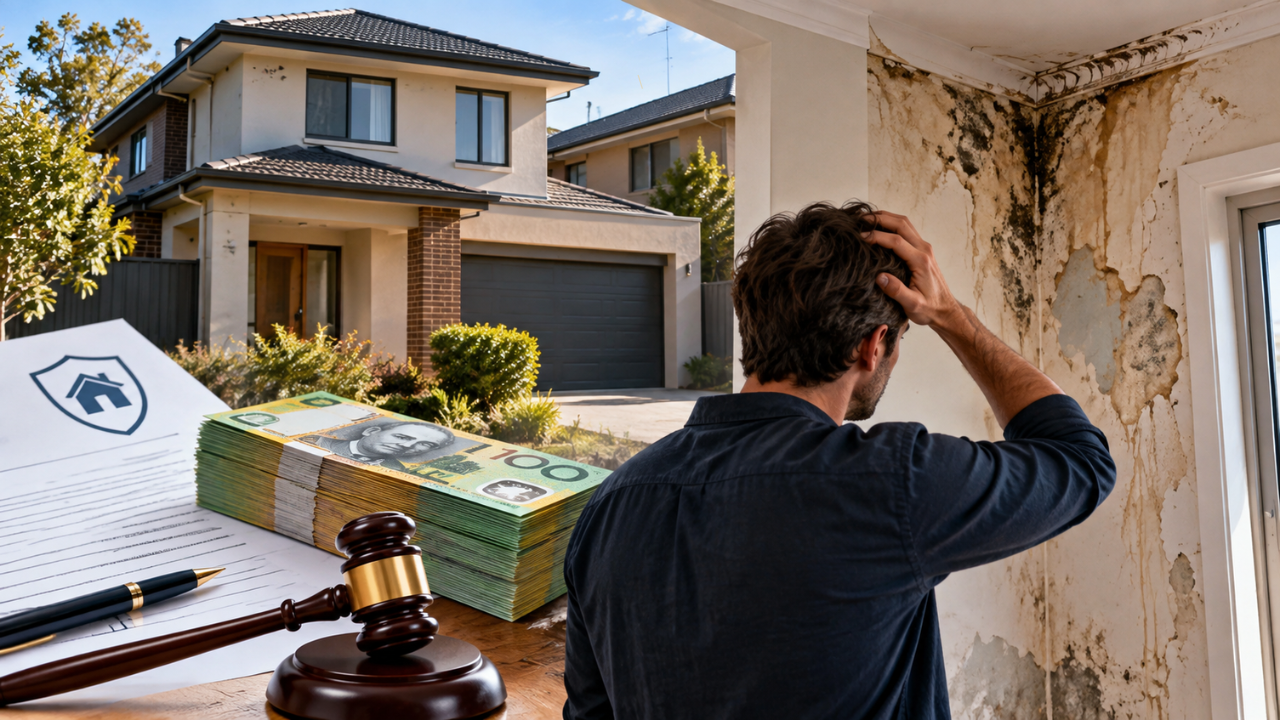
Buying a house is supposed to be an exciting milestone, but for one Melbourne property owner, it turned into a multi-year legal battle over hidden structural defects and a rejected insurance claim worth $176,297.76. When you purchase a home built years prior, you assume the risk is manageable. Reality often hits much harder once heavy rainfall exposes what previous inspections missed.
The core dispute centers around a property in Caulfield South, completed in November 2014. The homeowner, Mr. Fall-Armytage, bought the property and became the registered proprietor in May 2018. Months later, between June and November 2018, heavy rainfall triggered an unwelcome discovery: water damage, staining, mold, and active leaks.
The Insurance Claim and Legal Escalation
By August 2023, the homeowner filed a formal claim under the domestic building insurance policy, hoping to cover the mounting repair costs. The insurer refused the payout, setting off a legal chain reaction that reached the County Court.
The trial court initially ruled in favor of the homeowner, ordering indemnification for 11 distinct building defects alongside temporary accommodation and storage costs, totaling $176,297.76. However, the Victorian Building Authority—substituting the original Victorian Managed Insurance Authority—appealed the decision. The appeal focused entirely on the strict interpretation of policy clauses 34 and 35 regarding the exact duration and timing of coverage.
In Victorian Building Authority v Fall-Armytage [2026] VSCA 32, the Court of Appeal reversed the lower court’s decision. The appellate judges ruled that insurance clauses dictating coverage periods apply to when the actual loss, damage, or expense occurs, not merely when the original underlying construction defect or cause originates. Because the homeowner acquired the title long after the statutory two-year non-structural defect window had closed, the claim failed for the majority of the items.
Why Statutory Warranties Do Not Automatically Save Buyers
The homeowner attempted an alternative legal argument under section 9 of the Domestic Building Contracts Act 1995 (Vic). This section allows building warranties to run with the land, enabling subsequent owners to enforce them as if they were party to the original contract.
The Court of Appeal drew a sharp line between having legal standing and proving actual loss. While section 9 lets a later owner sue, it doesn't grant them the right to recover for financial harm suffered exclusively by a previous owner. Whether a successor in title actually suffered a loss depends on factual realities, such as whether the defect was already known at the time of purchase or whether the purchase price was discounted to account for it.
Lessons for Property Buyers and Homeowners
Real estate transactions rarely come with absolute guarantees once the ink dries on the contract. If you're looking at purchasing a property that has been standing for several years, standard building inspections might not catch everything lurking behind the walls. Water damage often hides for months, only showing its face after severe weather events.
Don't assume that domestic building insurance policies offer an open-ended safety net for secondary buyers. Insurers read policy text strictly, and courts tend to back literal interpretations over broad consumer protection arguments when temporal clauses are defined clearly. Always check the exact age of the structure, review warranty timelines carefully, and factor potential remediation costs into your initial purchase negotiations before you sign.