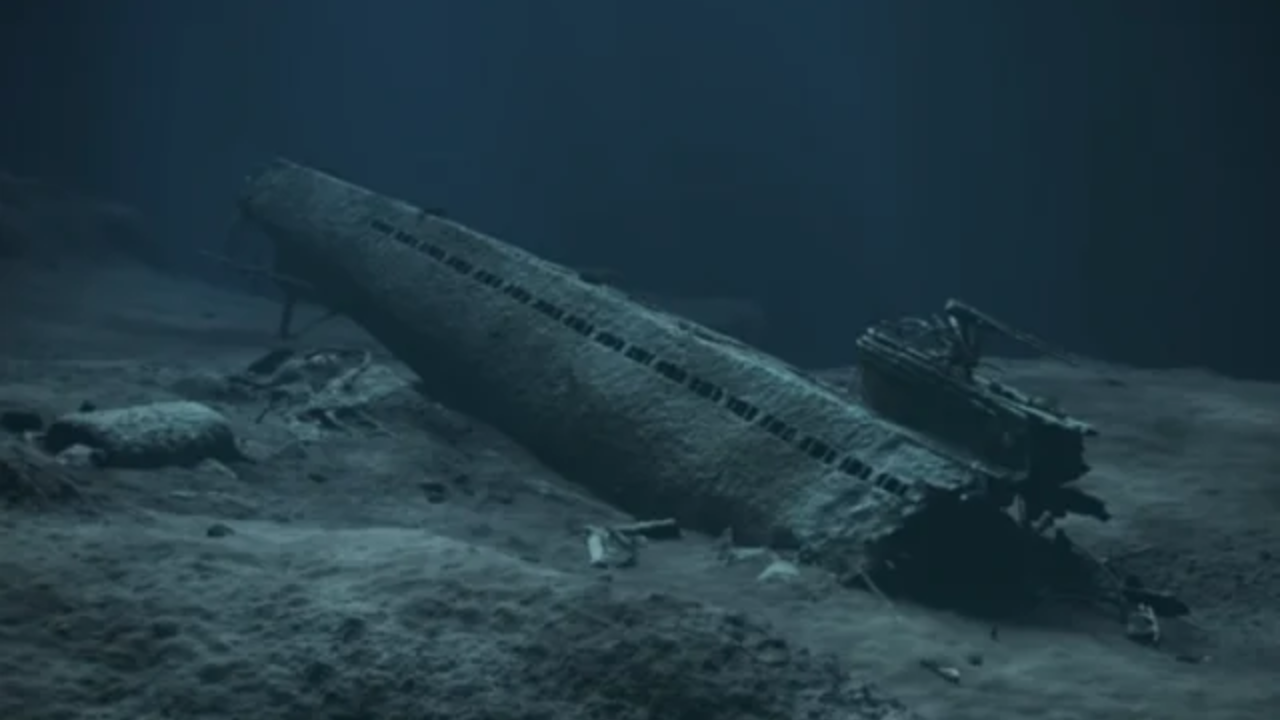
History doesn't always stay buried. Sometimes it sits 150 meters underwater, quietly leaking tons of toxic metal into the seabed while modern engineers panic over what to do next.
Eighty-one years after a British submarine blew a Nazi U-boat to pieces off the coast of Norway, the wreck of the U-864 has turned into an ongoing environmental disaster. You’d think a sunken World War II relic would be left alone as a war grave. But this isn't just a rusted hunk of steel. It’s carrying up to 67 tons of liquid mercury, and recent recovery operations have proven that trying to clean it up might actually make things worse.
If you’ve wondered why a forgotten submarine from 1945 is dominating marine safety briefings today, the answer comes down to a lethal combination of wartime desperation, persistent chemical toxicity, and a brutal engineering nightmare.
The Secret Mission That Ended on the Ocean Floor
Back in February 1945, Nazi Germany was losing the war on every front. In a desperate bid to keep its military-industrial alliance with Japan alive, Berlin dispatched the Type IXD2 submarine U-864 on a high-stakes voyage known as Operation Caesar. The cargo manifest wasn't just standard military gear. It included aircraft blueprints, advanced technological components, and thousands of containers of metallic mercury meant to supercharge Japanese munitions production.
The sub never made it out of European waters. British intelligence intercepted German communications, and the Royal Navy dispatched the submarine HMS Venturer to hunt it down. On February 9, 1945, off the Norwegian island of Fedje, the Venturer did something unprecedented in naval history. It tracked and torpedoed an enemy submarine while both vessels were completely submerged.
One torpedo struck the U-864 dead center, breaking it apart and sending it straight to the bottom with all 73 crew members and two Japanese engineers trapped inside. It vanished into the dark, resting about four kilometers west of Fedje, where it remained undisturbed for nearly six decades.
How a Lost Cargo Manifest Became a Modern Nightmare
For decades, the exact nature of the U-864's payload was a mystery. It wasn't until the late 1990s that researchers pieced together historical documents from British archives, revealing a wartime Japanese order for 1,867 mercury containers.
When the Norwegian naval vessel KNM Tyr finally located the wreck in 2003, authorities realized they were sitting on an ecological ticking time bomb. Mercury doesn't degrade. Unlike organic waste or conventional fuel oil, metallic mercury lingers, shifts through marine sediments, and transforms into methylmercury—a neurotoxin that climbs the aquatic food chain and accumulates in fish and shellfish.
Ever since 2005, the Norwegian government has enforced strict dietary warnings against eating seafood caught near the wreck site, specifically targeting pregnant women and young children. Government surveys reveal that roughly 47,000 square meters of seabed around the site are contaminated, with about 4 kilograms of toxic mercury leaking into the surrounding waters every single year.
The 2026 Recovery Operation Backfired
Norway's Coastal Administration, known as Kystverket, finally attempted a physical extraction of the cargo. Workers focused on the bow section of the shattered submarine, exposing six keel boxes and pulling up 22 mercury containers for direct examination.
The results were alarming. Approximately 80% of the recovered containers were damaged and actively leaking. Several even bore the stamp "Almadén," tracing their origin back to Spain’s historic mining region.
More importantly, the excavation work stirred up the surrounding seabed, releasing free-flowing mercury into the open water. This created a terrible catch-22 for marine engineers. Leaving the wreck alone means a slow, continuous leak of neurotoxins for centuries. But trying to salvage the remaining hundreds of containers risks causing a massive chemical plume that could devastate local fisheries instantly.
What Happens Next
Faced with a choice between a risky cleanup and permanent containment, Kystverket made a pragmatic call. Instead of tearing apart a fragile 81-year-old wreck to chase every last drop of mercury, authorities recommended sealing the entire site beneath a massive protective cover on the seafloor.
The proposal is currently sitting on the desk of Norway's Ministry of Trade, Industry and Fisheries for a final ruling. It’s a stark reminder that the debris of global conflicts can outlive the generations who fought them, leaving modern societies to clean up the invisible fallout left behind on the ocean floor.