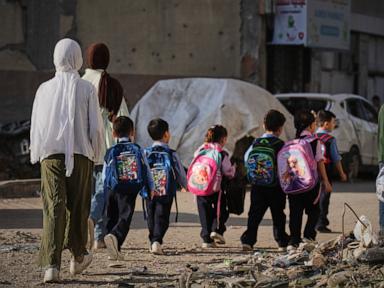
Monitoring children and teachers inside classrooms using automated speech recognition is no longer science fiction. A United States-based charity operating schools in Gaza has announced plans to deploy artificial intelligence to record and scrutinize classroom dialogue, targeting what it categorizes as "hateful," "inciting," or "antisemitic" language.
The move has triggered sharp pushback from privacy advocates, educators, and regional observers who argue that importing automated surveillance into war-torn education spaces sets a dangerous precedent.
The Core Motivation Behind the Surveillance Plan
The charity behind the initiative is Academies of Hope, founded by Dr. David Hasan, a Duke University neurosurgeon of Palestinian descent who volunteered in Gaza hospitals during the conflict. Confronted with the immense challenge of rebuilding educational infrastructure after years of war, Dr. Hasan argued that strict oversight is necessary to ensure educators stick to a specific curriculum centered on peace and tolerance.
According to reports, the proposed technology would record daily classroom interactions, process the audio through algorithms designed to catch flagged vocabulary, and send automated alerts directly to the charity's leadership. The founder has openly acknowledged the controversial nature of the setup, stating that it represents a necessary tool to enforce curricular standards and pursue ideological de-radicalization in a fragile environment.
However, details regarding how the system handles contextual speech, local dialects, code-switching, or false positives remain largely undisclosed. Critics point out that automated speech recognition models struggle immensely with regional Arabic dialects and nuanced political discourse, often misinterpreting ordinary expressions or rhetorical questions as threats.
Why Critics Call It a Pandora’s Box
Education in Gaza is already facing a catastrophic crisis. The United Nations Children's Fund notes that hundreds of thousands of children remain out of school, with a vast majority of educational facilities severely damaged or completely destroyed. Against this backdrop of physical devastation, introducing constant digital surveillance feels less like rebuilding and more like policing.
Human rights defenders have raised immediate alarms. Recording children and instructors creates a pervasive climate of fear. When teachers know every sentence is being evaluated by an opaque machine algorithm, open discussion dies. Instead of fostering authentic dialogue about history, conflict, and peace, automated monitoring encourages extreme self-censorship.
Furthermore, surveillance infrastructure introduced under the banner of humanitarian aid or peace education rarely stays temporary. Once listening devices and transcription algorithms are embedded into classrooms, the data pipelines created can easily be repurposed by outside entities or future administrators.
The Broader Debate Over EdTech Oversight
The tension between curriculum control and classroom autonomy is nothing new, but the deployment of algorithmic enforcers inside high-conflict zones pushes the debate into uncharted territory. Proponents argue that external donors funding educational relief have a right to protect their investments and prevent radicalization. Yet educators on the ground counter that trust cannot be coded into software.
When you introduce automated speech policing into a traumatized community, you signal a fundamental lack of trust in local educators. Teachers who survived active combat and displacement now face the prospect of a machine listening in on their lessons, ready to flag them for review at any moment.
If educational reconstruction in Gaza is going to succeed, it requires sustainable rebuilding, local ownership, and psychological safety for both students and staff. Relying on automated surveillance systems to enforce speech rules risks creating an environment of paranoia rather than an atmosphere of learning.
Evaluate the long-term impact of automated monitoring tools in sensitive zones carefully before accepting them as modern solutions to complex geopolitical challenges. Prioritize transparency, community consent, and human-led pedagogy over opaque algorithmic controls.