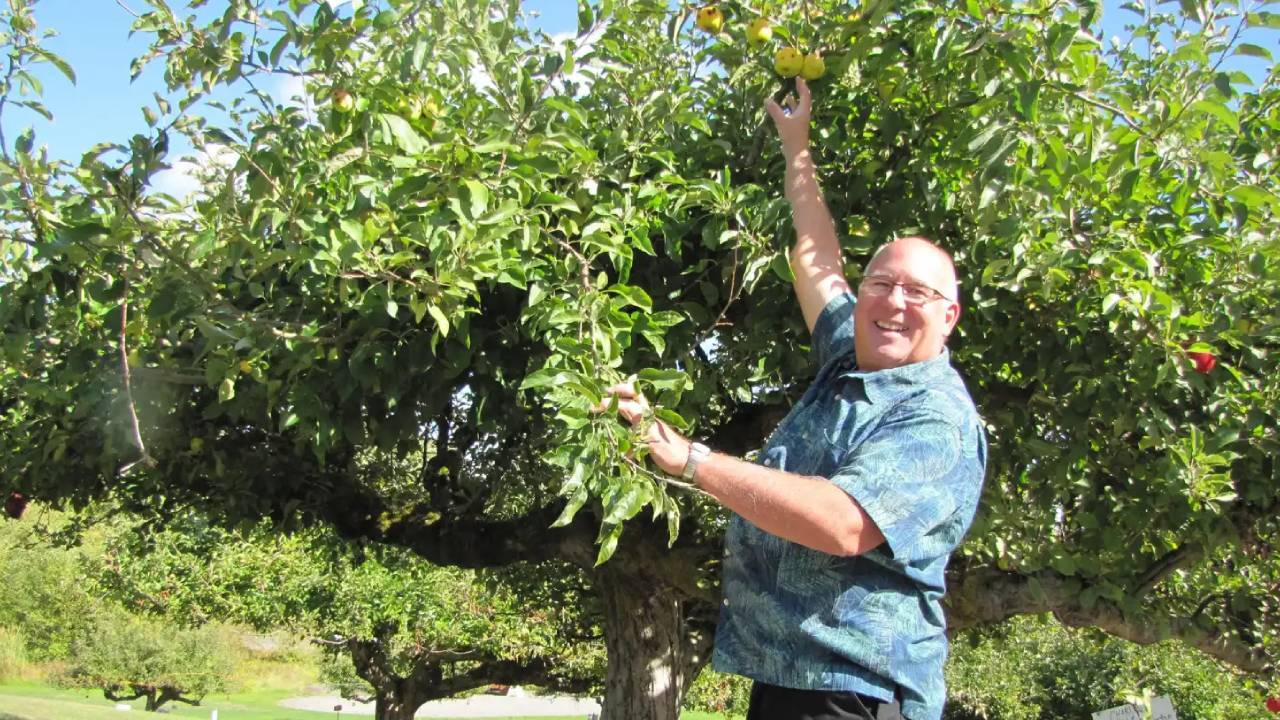
Most people think retirement means golf courses, gardening, or afternoon naps. Dave Benscoter chose a different path. When a routine favor helping a neighbor clear brush in her church orchard in 2012 turned into an unexpected brush with agricultural history, the retired FBI agent didn't just walk away. He started asking questions.
Those questions snowballed into a decade-long obsession. Today, Benscoter and his collaborators have successfully rediscovered 30 forgotten apple varieties across the Pacific Northwest that historians and botanists assumed were gone forever.
If you think modern grocery store shelves offer plenty of variety, you are looking at a tiny fraction of what used to exist. American agriculture has abandoned thousands of historic apple cultivars in favor of a handful of uniform, transportable, supermarket-friendly options like Red Delicious and Gala. But beneath that corporate veneer lies a forgotten orchard ecosystem worth remembering.
From Federal Investigations to Orchard Forensics
How does an ex-FBI investigator transition to tracking down heirloom fruit? It turns out the skill sets overlap more than you might expect. Both fields require relentless archival digging, attention to tiny discrepancies, and cross-referencing old records.
When Benscoter first looked at those mystery trees, he didn't possess any secret botanical training. He just knew how to follow a trail. He dug through dusty county fair records, nineteenth-century agricultural journals, nursery catalogs, and local newspaper archives.
Working alongside orchard preservationists like Joanie Cooper and Sean Shepherd from Oregon's Temperate Orchard Conservancy, plus his frequent partner E.J. Brandt, Benscoter co-founded the Lost Apple Project. Their operating rules are specific: they focus on apple trees planted in eastern Washington, western Idaho, and northern Oregon prior to 1920.
Finding a suspected historic tree is only half the battle. The real work involves matching physical fruit specimens with century-old pomological descriptions, illustrations, and DNA profiles. When the pieces fit, a ghost from American agricultural history comes back to life.
The Real Cost of Agricultural Homogeneity
Why does finding a lost apple matter? It is not just about nostalgia or tasting an old piece of fruit.
Modern commercial farming relies on genetic bottlenecks. When a disease or climate shift threatens a monoculture crop, a lack of genetic diversity spells disaster. Historic varieties often carry natural resistances, unique flavor profiles, and adaptability traits that modern commercial breeds bred out centuries ago.
Consider names like Streaked Pippin, Sary Sinap, Nero, and Fall Jenneting. These sound like characters in a fantasy novel, but they were once standard staples of regional diets. Each lost variety represents a distinct adaptation to microclimates, soils, and pest pressures in specific American regions.
When varieties vanish, we lose genetic insurance policies for our food supply. That gives grassroots orchard preservation real stakes.
The Human Side of the Hunt
The mission isn't just an academic exercise. It frequently unlocks deep personal connections for people who have spent lifetimes searching for ghosts.
Benscoter often recounts the story of an Arkansas farmer who was nearing retirement with one major regret. Decades earlier, he had fallen in love with the lore of the Kittageskee apple, a regional southern fruit that had seemingly vanished from existence. He figured he would never lay eyes or hands on one.
Years later, a member of the Lost Apple Project network in the Boise, Idaho area spotted unusual apples, picked them, and sent them in for testing. They turned out to be the long-lost Kittageskee. Connecting that missing piece back to a farmer who had given up hope remains one of the project's most rewarding moments. That is what keeps volunteers scouring old homesteads and abandoned farms year after year.
How Heritage Grafting Keeps History Alive
Finding a rare tree is thrilling, but keeping it alive requires active stewardship. You cannot just leave a fragile historic tree alone in an abandoned field.
The process requires two distinct phases. In autumn, researchers collect physical apple specimens for identification and DNA verification. Once experts confirm a variety is truly lost and rediscovered, volunteers return to the site during the dormant winter months to cut scion wood.
They graft these living branches onto healthy rootstocks. This propagation creates direct genetic clones of the original historic trees, planting them in safe orchards where they can thrive, produce fruit, and supply grafting material for future preservationists.
If you have an old homestead orchard on your property dating back generations, you might be sitting on botanical history. Check local historical societies, look at old plat maps, and don't assume those gnarled, unkempt trees producing weird-looking fruit are useless. They might just be waiting for someone to notice.